Hook-and-Loop Fire Sleeve
Wrap this sleeve around a hose or harness with fittings in place. The hook-and-loop seam reopens for inspection.
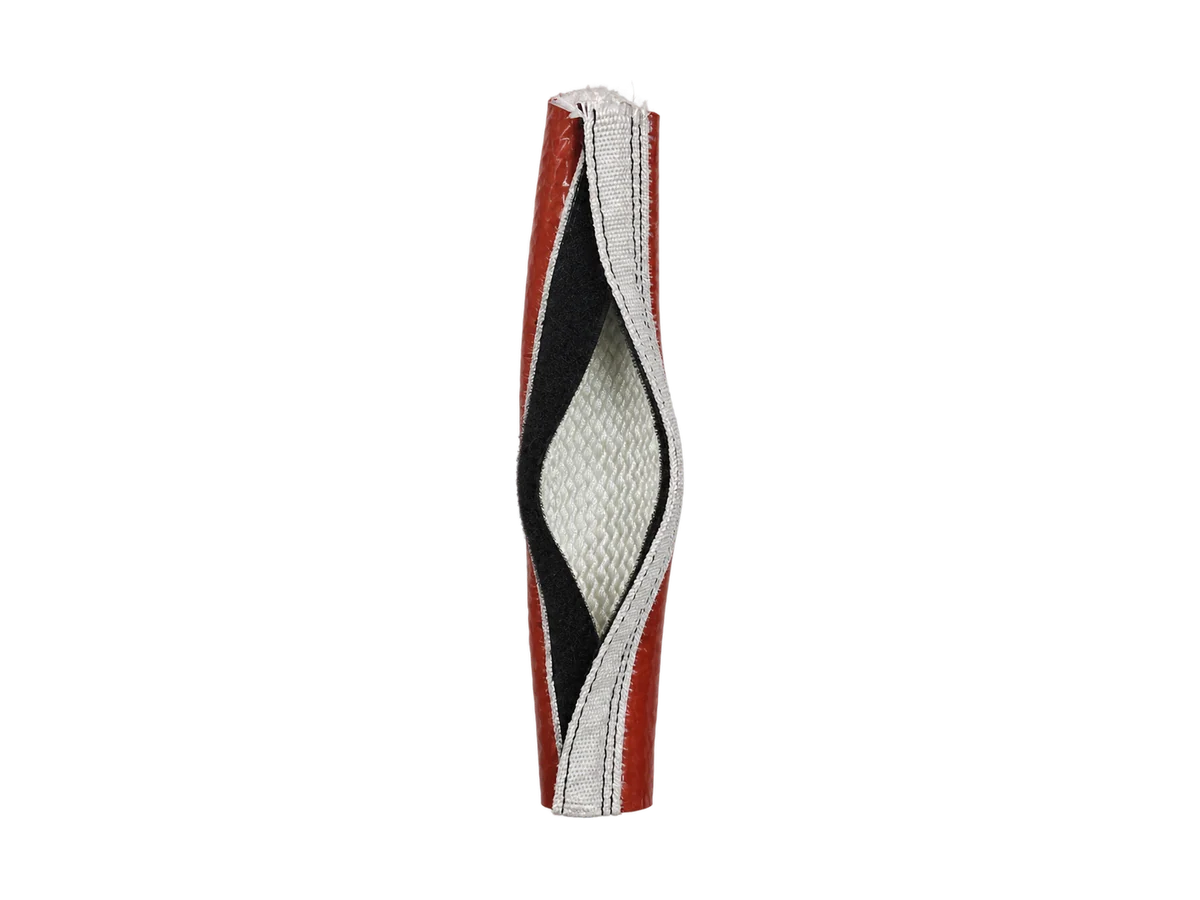
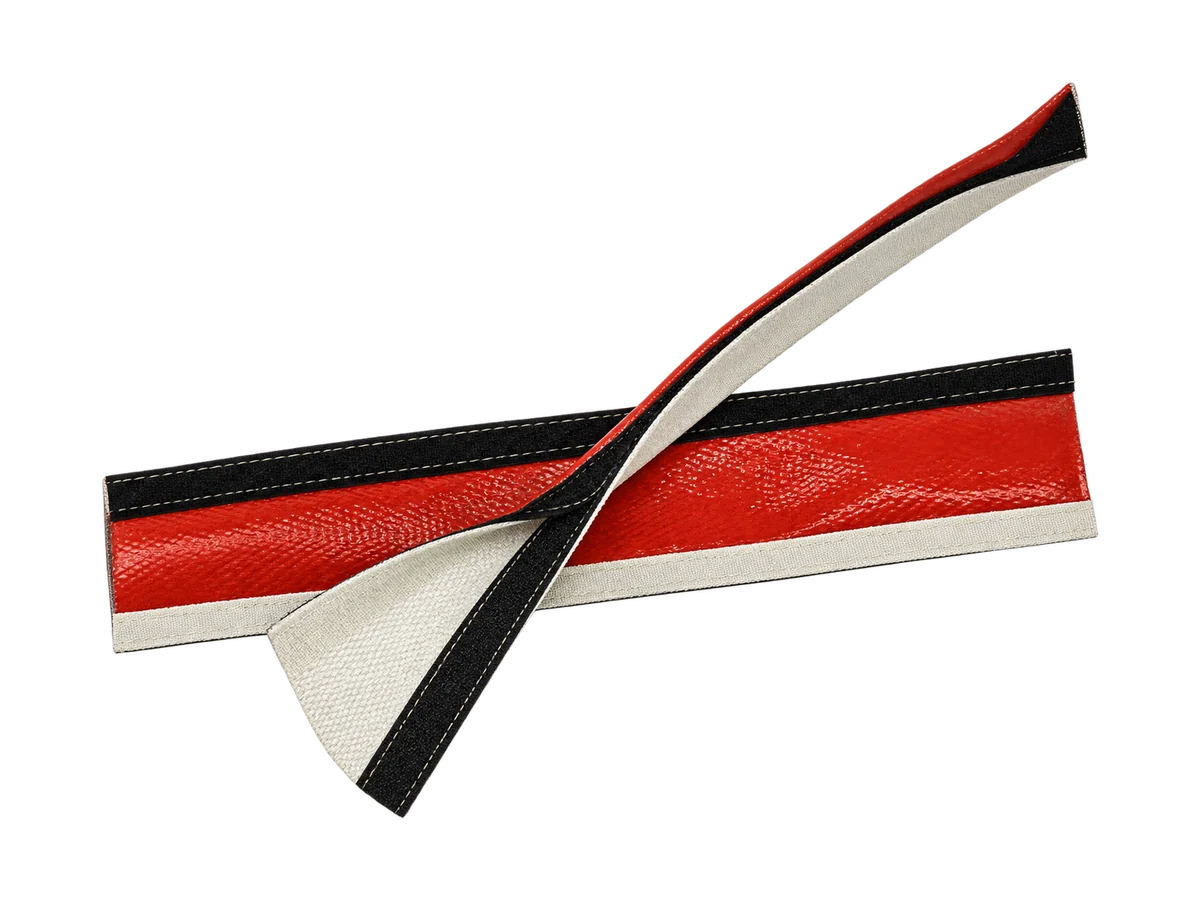
Technical specifications
| Inner material | Fiberglass |
|---|---|
| Outer coating | Silicone rubber |
| Closure | Lengthwise hook-and-loop seam |
| Installation | Wrap around an assembled hose or harness |
| Reference inside diameter | 10–100 mm when closed |
| Colour shown | Red |
Fit and temperature selection. Check seam overlap on a sample at the widest point of the bundle. For high-temperature service, request the continuous and peak ratings for the assembled sleeve, including its fastener.
Construction
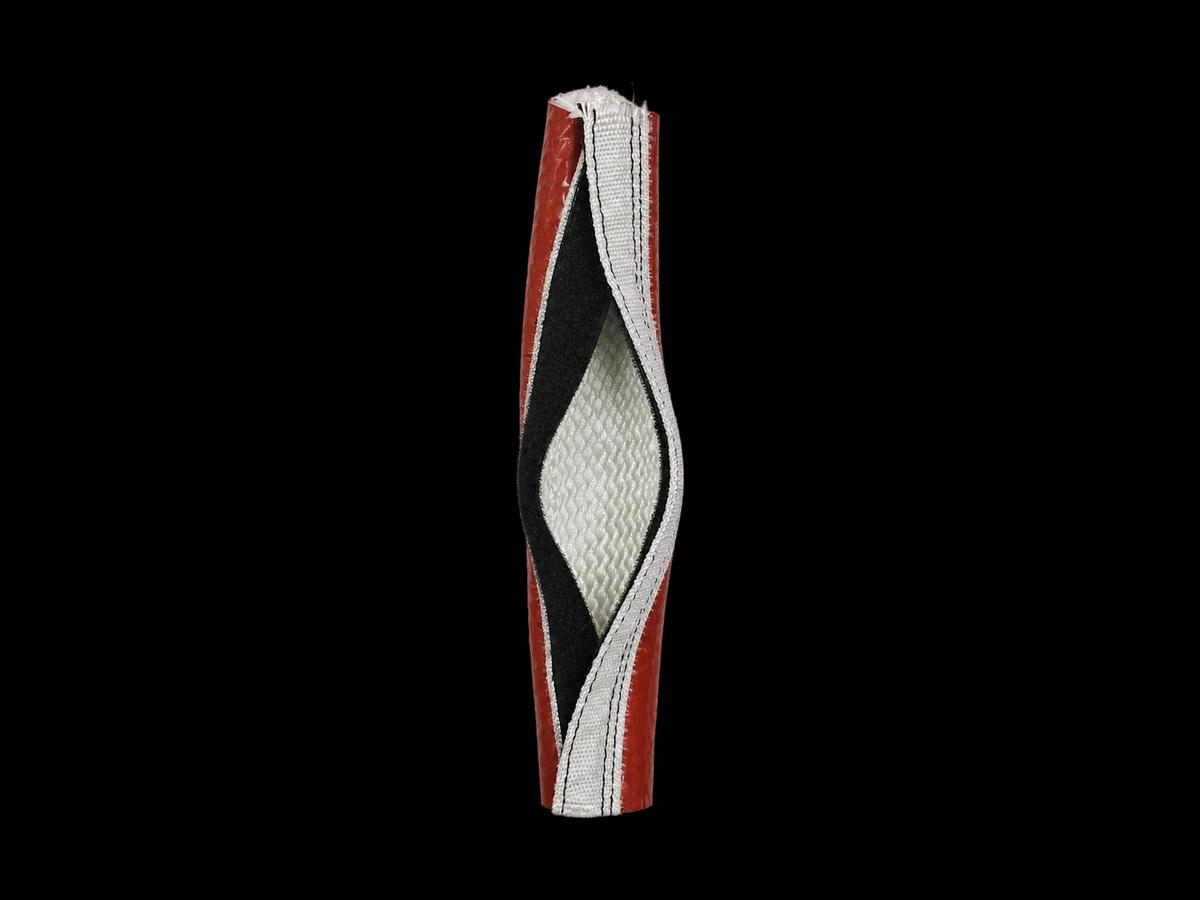
Reusable side entry
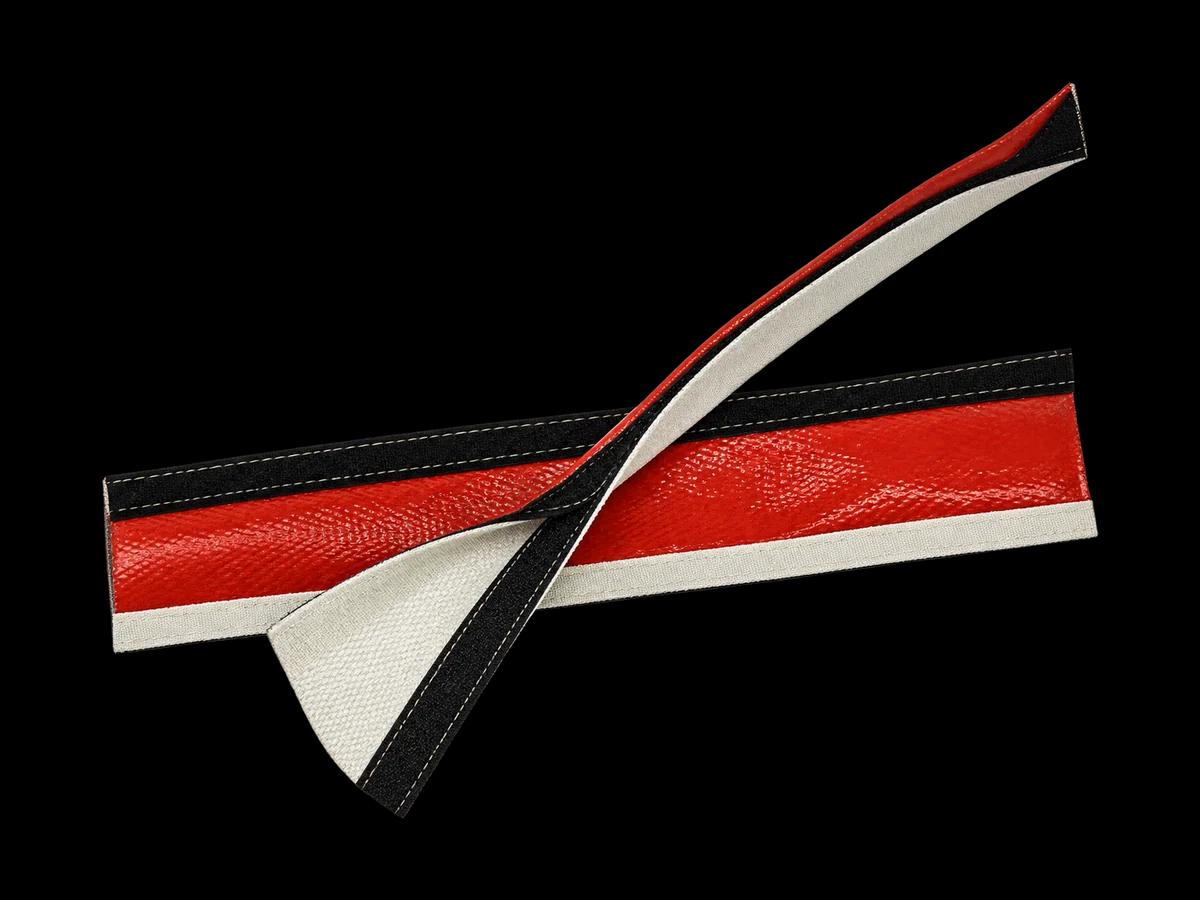
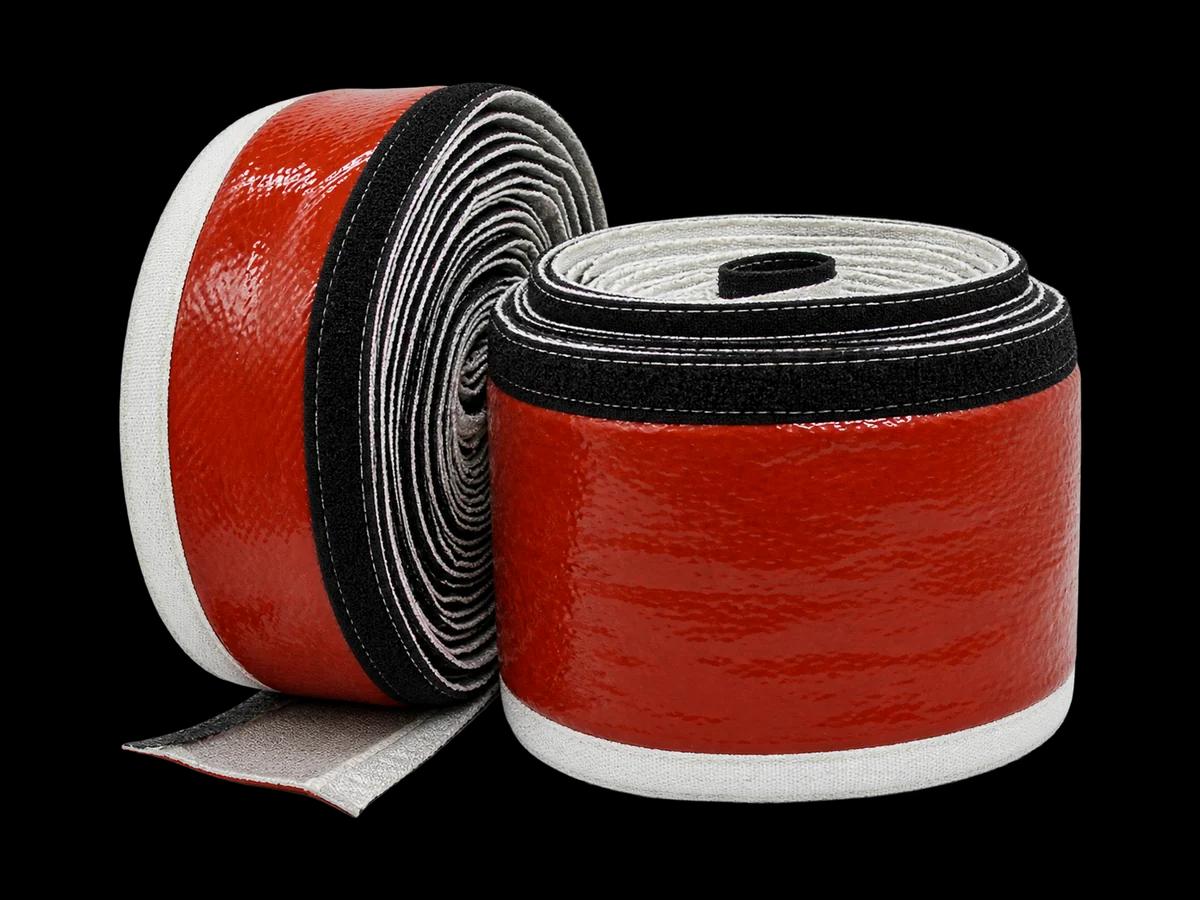
The black fastening strips run along the edges of the wrap. Opening them exposes the woven lining.
Open the lengthwise hook-and-loop closure to fit the wrap around an installed cable or hose. The end fittings can stay connected. The wrap can be removed, refitted and reused for inspection or replacement.
- Heat and spatter protection
- The fiberglass lining insulates the line and is described as flame retardant and resistant to thermal shock. The silicone rubber exterior sheds sparks, weld slag and molten-metal splashes. The wrap also helps reduce incidental contact with hot lines.
- Bends, wear and fluids
- The wrap flexes around bends and shields the line from debris and oil splashes. The brief lists resistance to abrasion, ageing, oil, acids and alkalis. Confirm compatibility for the fluid, concentration and temperature in service.
- Electrical insulation
- The brief lists electrical insulation among the protective properties. Ask for dielectric data for the assembled wrap, including the fastening strip, if the application requires an electrical rating.
Applications
- Welding workstations
- Welding-robot cables and oil or air hoses serving welding torches.
- Industrial equipment
- Cables near ovens and furnaces, hot pipework and hydraulic hoses.
- Battery and thermal-management systems
- Battery-pack harnesses and thermal-management lines in new-energy equipment.
- Boilers and HVAC
- Insulating covers for accessible sections of hot piping.
- Vehicle manufacturing
- Welding-fixture harnesses on production lines, engine-bay pipework, hot-zone vehicle wiring and turbocharger piping.
Selection & handling
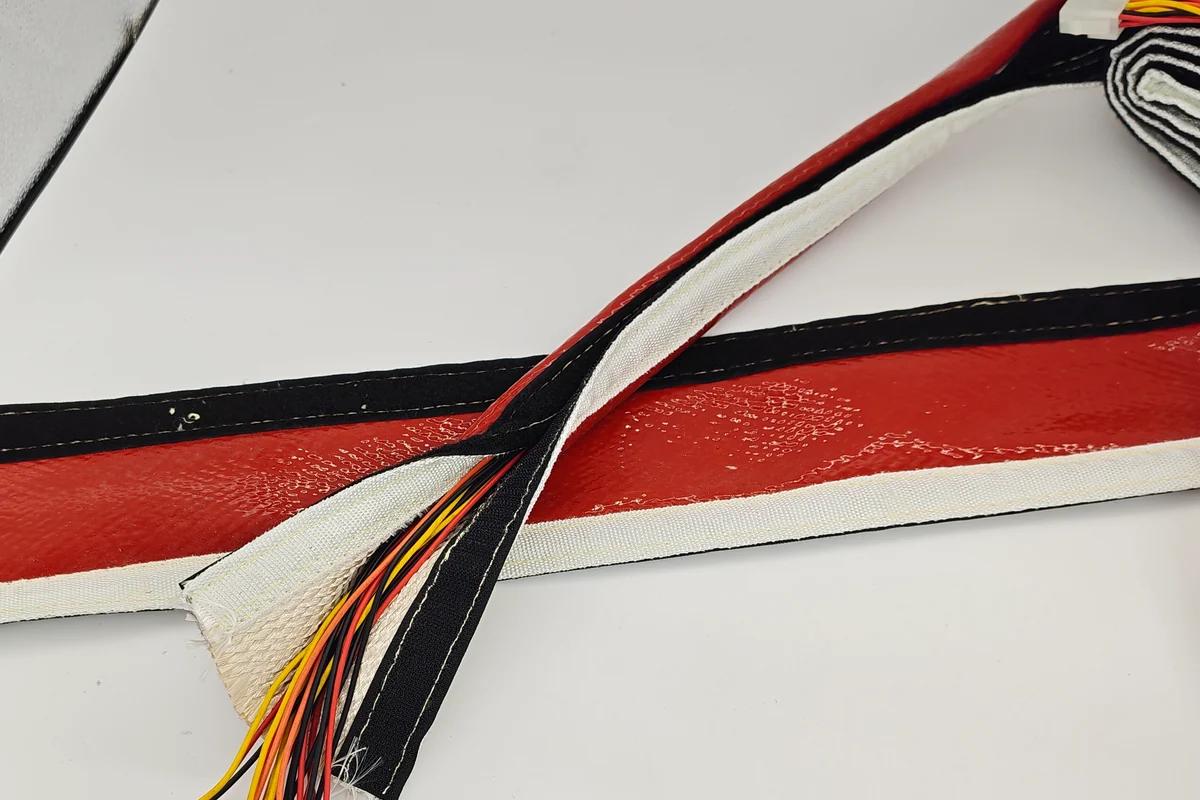
Fitting an assembled harness
Wrap the sleeve around the harness from the side and fasten the seam with the connectors still in place.
Request a sample- Measuring a wrap
- Give the maximum outside diameter of the assembled bundle, the length to cover and the space available at the seam. Flat wrap width and installed diameter are different measurements.
- Retrofit and maintenance
- Side entry saves the disconnection work normally needed to thread a sleeve over the end. The brief mentions retrofitting without a shutdown. Whether that is permissible depends on the equipment and the site procedure. Follow the equipment’s isolation procedure for installation and servicing.
Fitting the wrap around an assembled harness
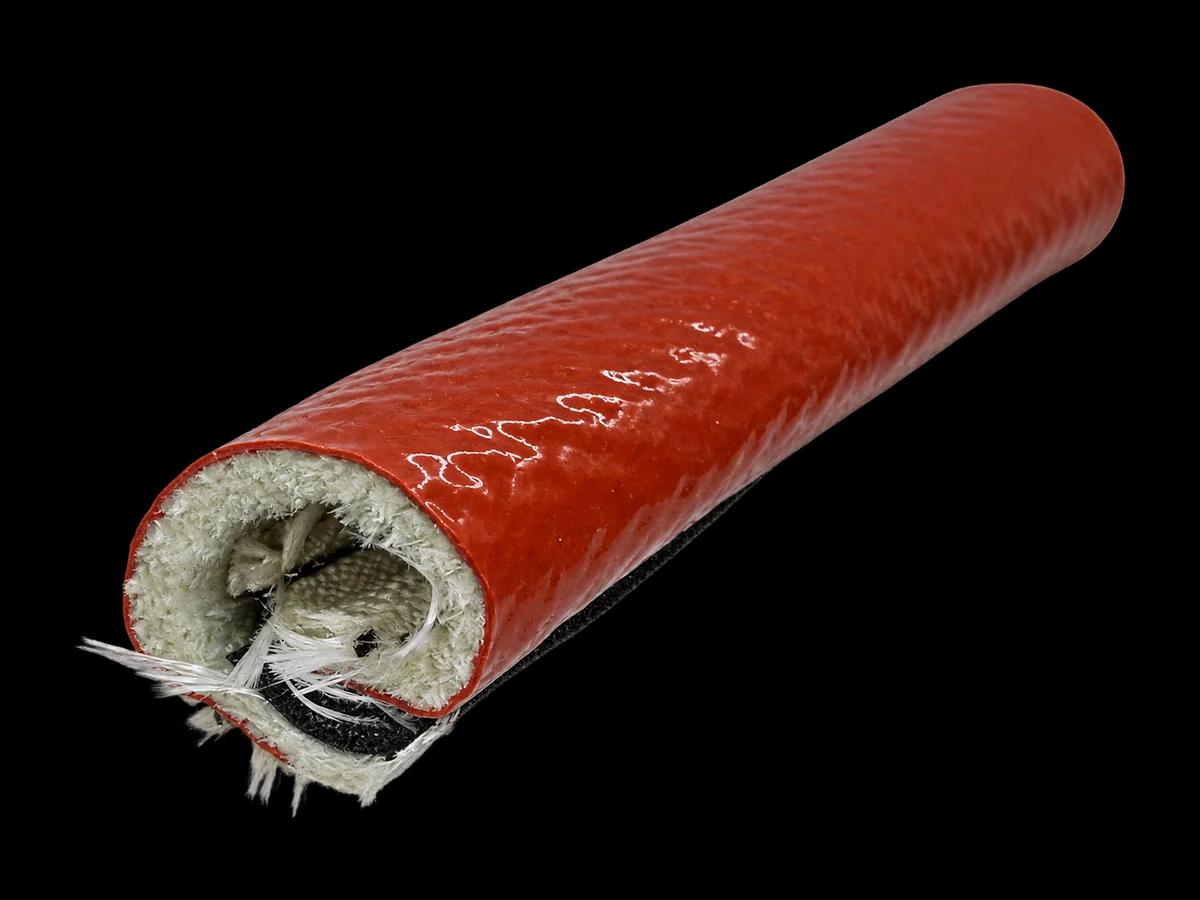
These views show the fastening edges, inner face and closed end. Side entry is useful when a connector is wider than the bundle or the line needs to be opened again for maintenance.