
Fire Sleeve
Slide this silicone-coated fiberglass sleeve over a hose or cable to protect it from heat and weld spatter.
Technical specifications
| Inner material | Braided fiberglass |
|---|---|
| Outer coating | Silicone rubber |
| Construction | Closed tube |
| Installation | Slide over an accessible end |
| Reference inside diameter | 3–100 mm |
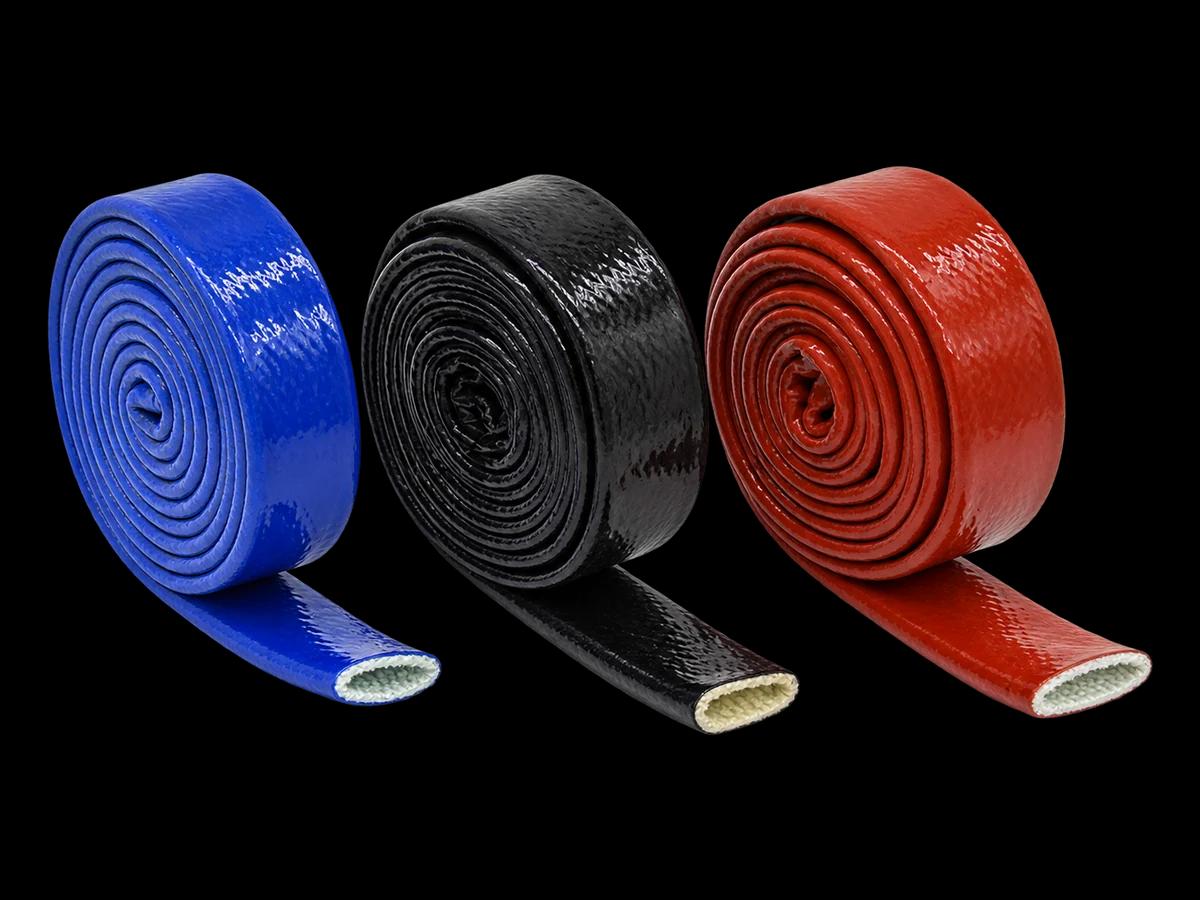
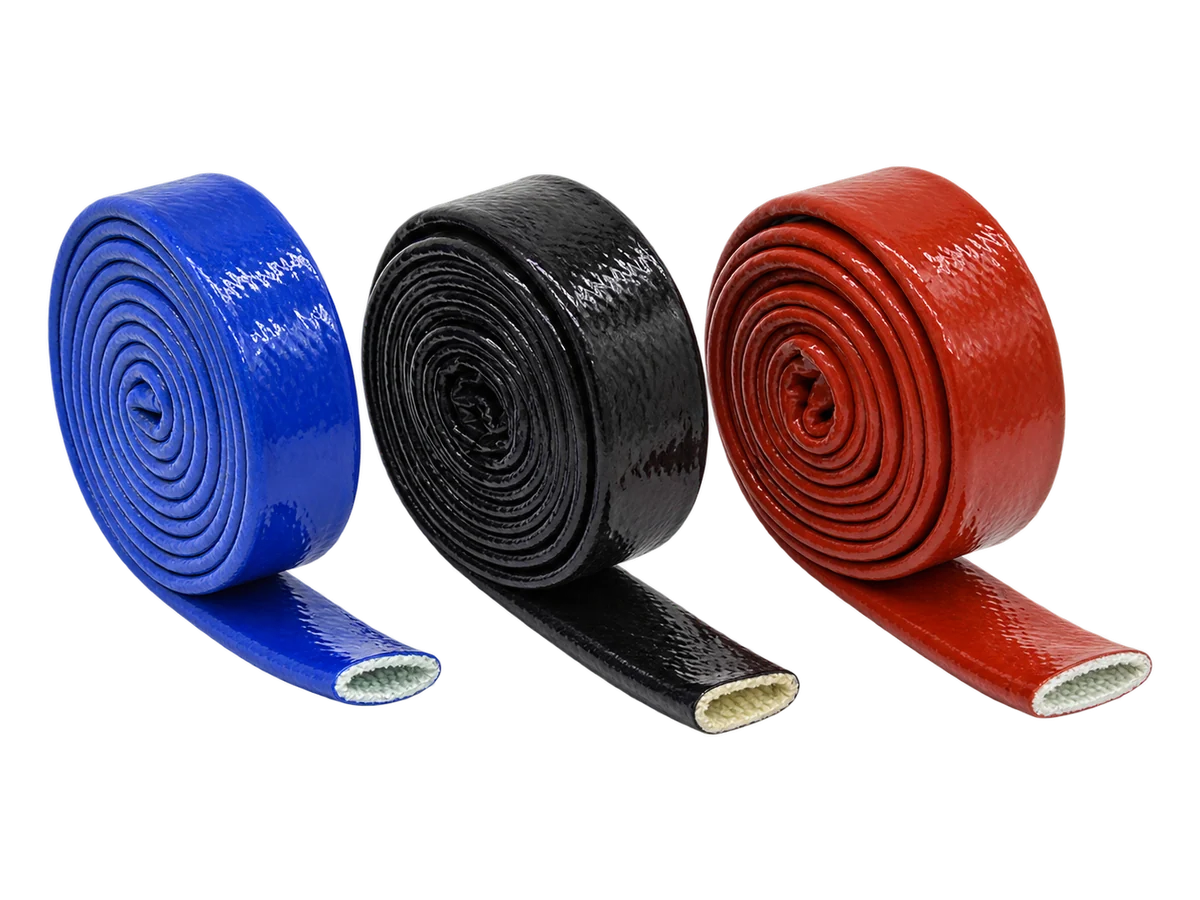
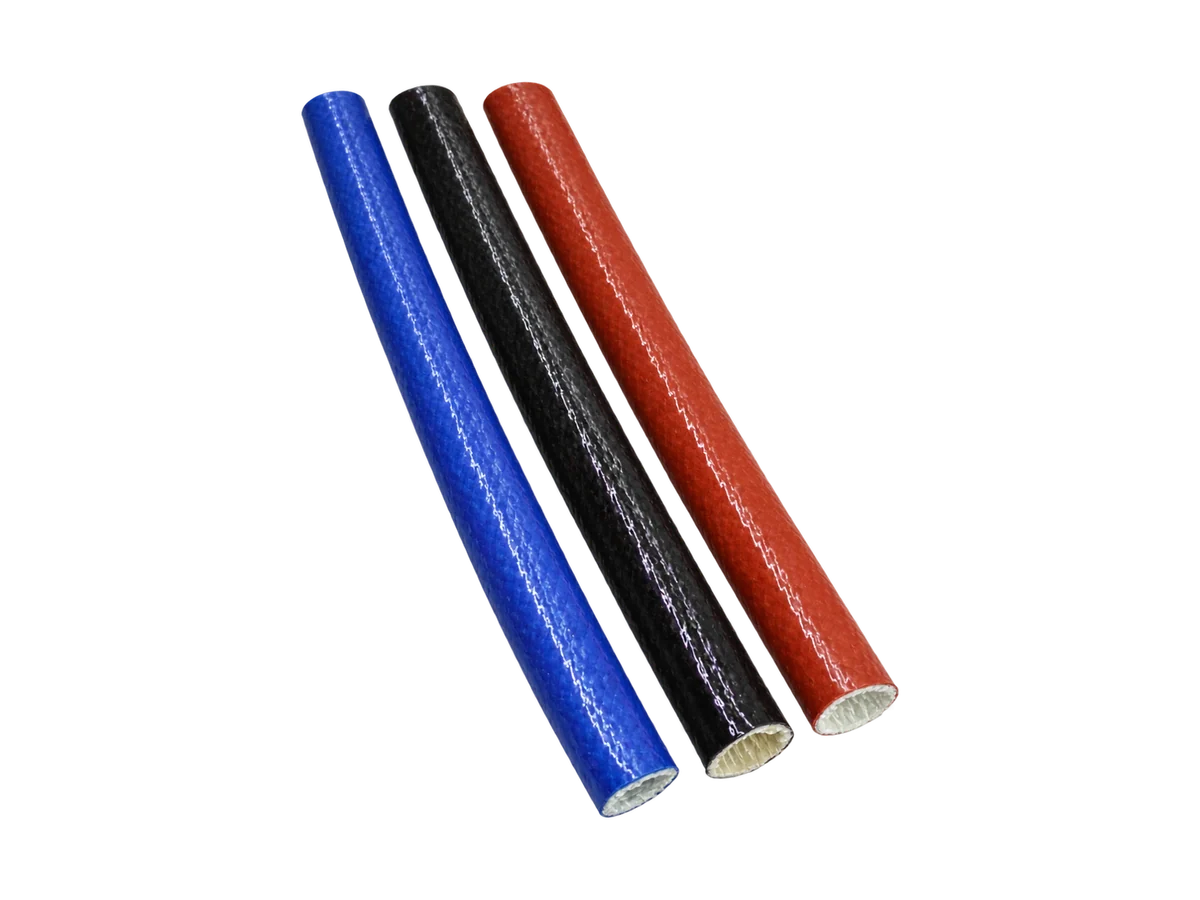
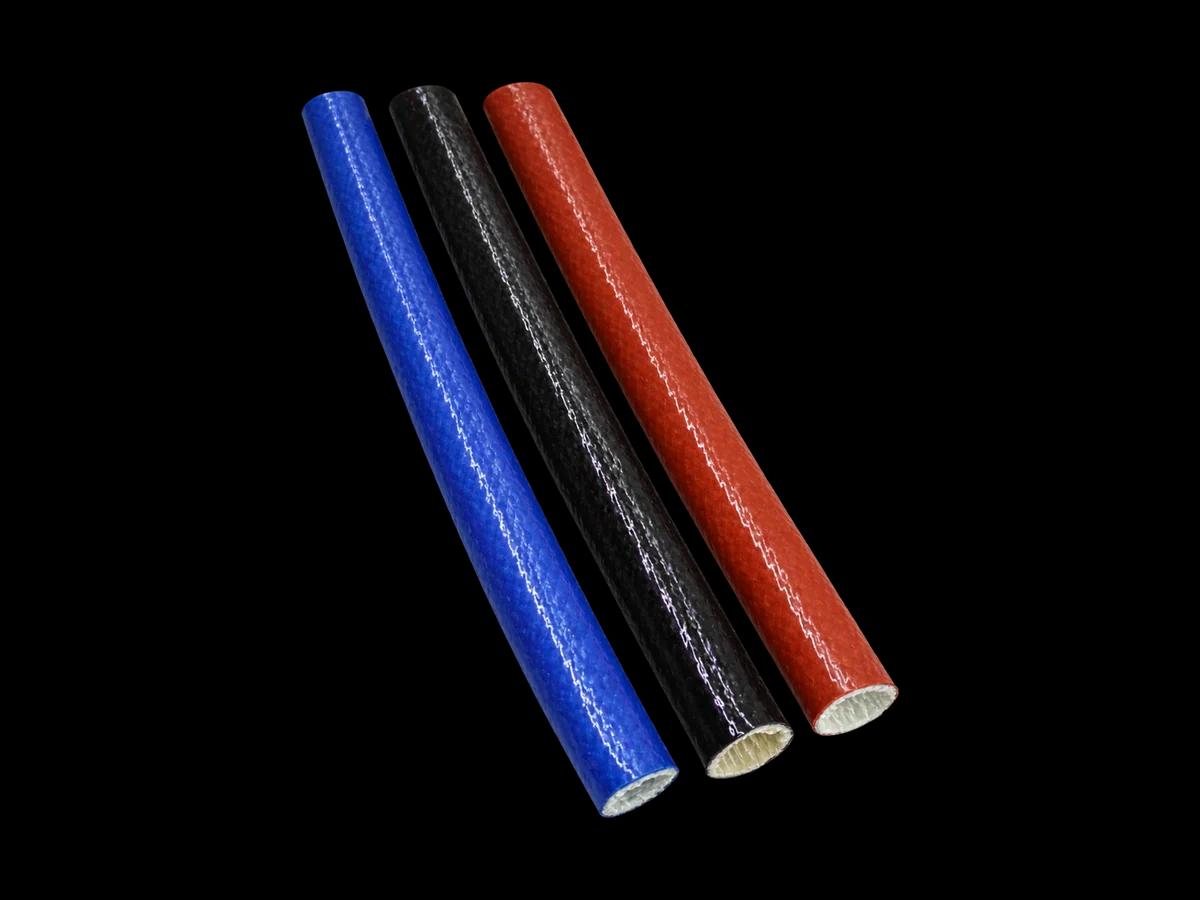
| Colours shown | Blue, black and red |
Temperature selection. Specify the lowest and highest service temperatures, how long the sleeve will be exposed and the diameter required. Request the operating range for the finished sleeve.
Construction
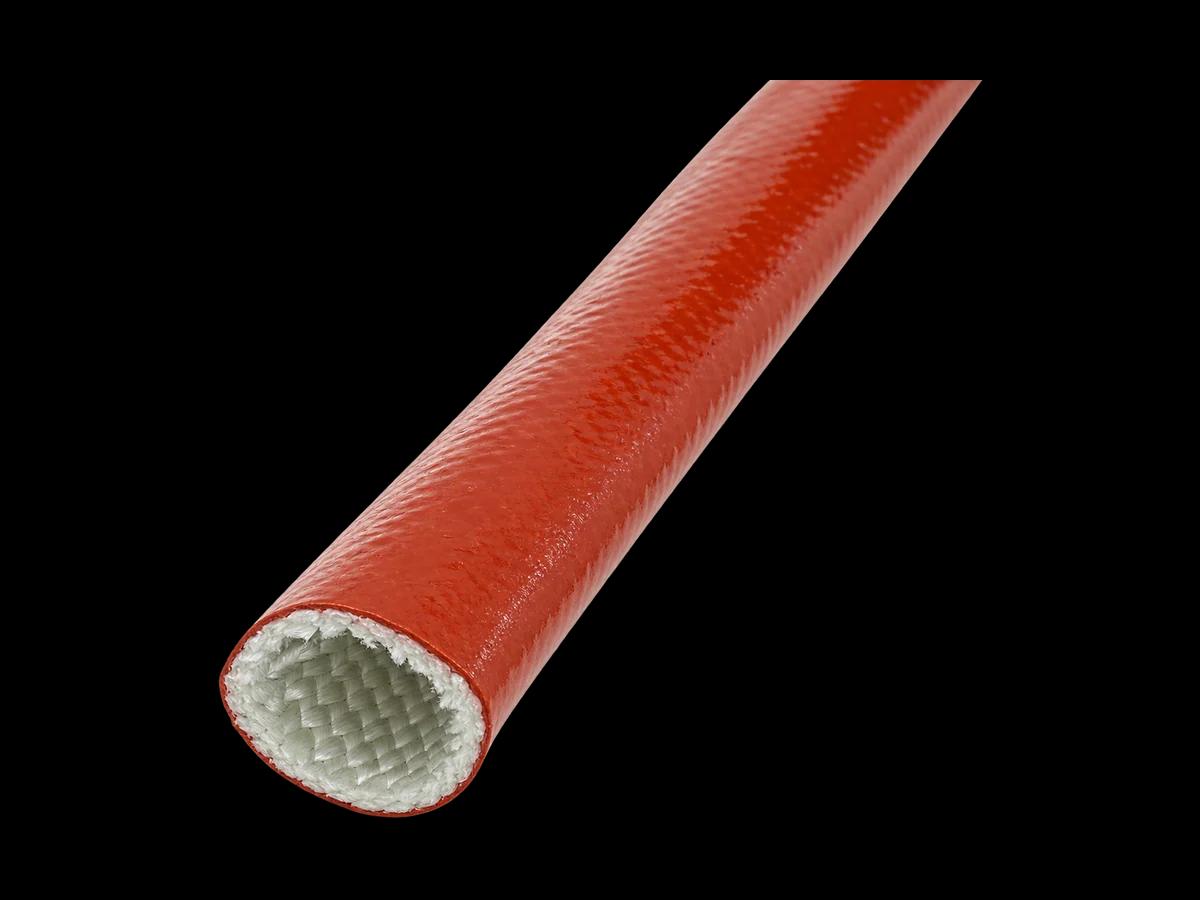
Insulating inner tube
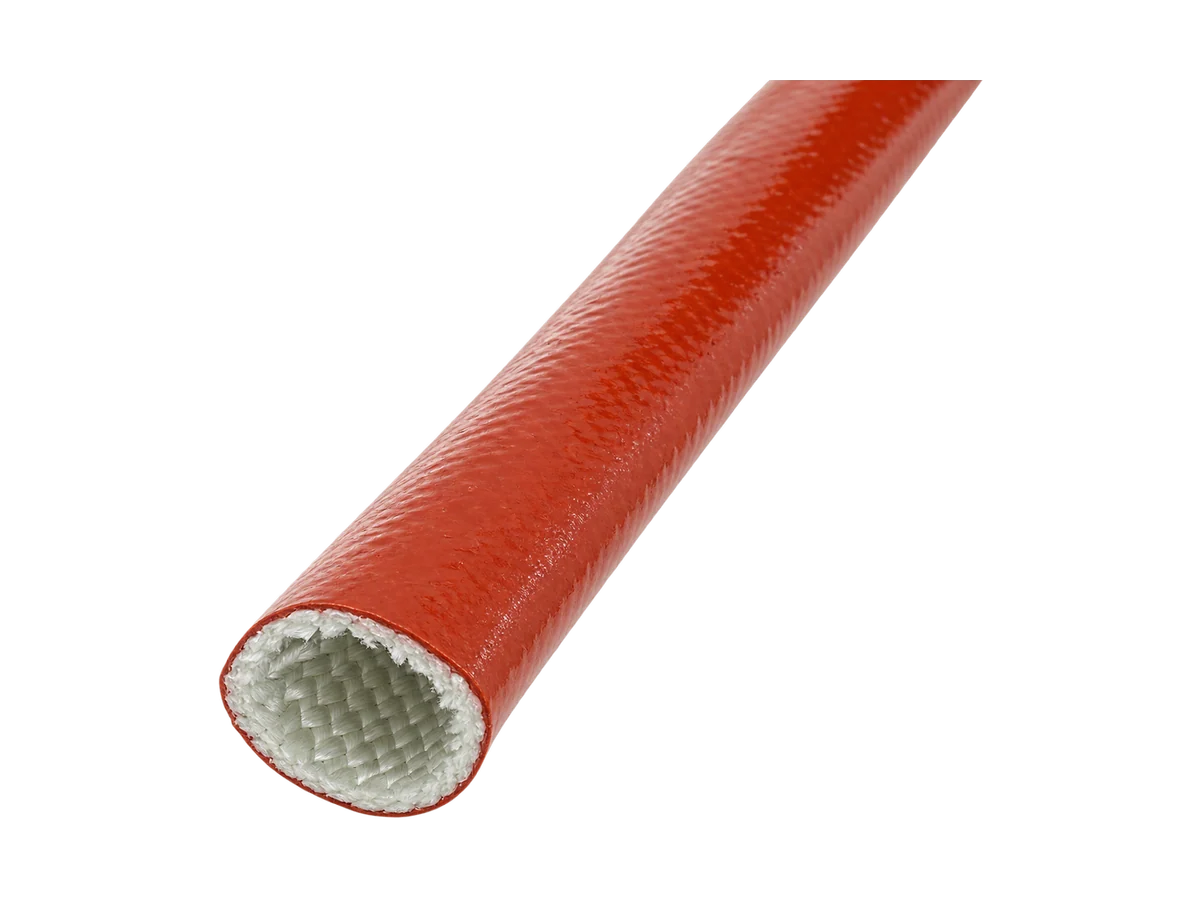
The cut end exposes the white fiberglass lining inside the red silicone rubber wall.
The woven fiberglass lining insulates the hose or cable. The product brief describes the lining as flame retardant and resistant to sudden changes in temperature.
- Weld spatter and hot surfaces
- Sparks, weld slag and splashes of molten metal tend to slide off the silicone rubber surface. The two layers limit heat transfer and help reduce incidental contact with hot hoses and pipes.
- Wear and flexibility
- The thick, flexible wall follows tight bends in hoses and harnesses. Its resistance to abrasion and tearing helps extend service life. The outer layer also shields the line from debris and oil splashes.
- Water, oils and chemicals
- The brief lists water resistance, electrical insulation and resistance to ageing, oil, acids and alkalis. For a particular chemical, specify the fluid, concentration and service temperature. For electrical use, request the dielectric rating of the selected sleeve.
Applications
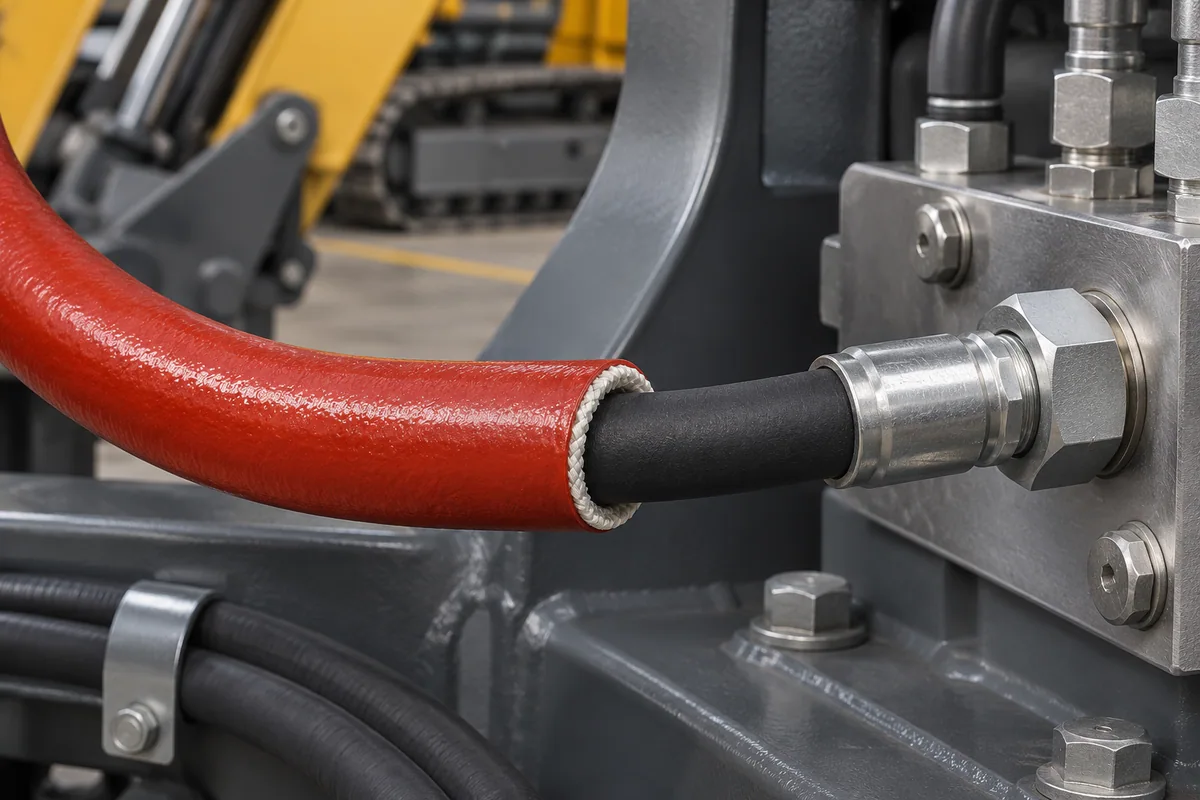
Construction machinery
The red sleeve ends just before the metal fitting on this hydraulic hose.
Oil hoses and wiring harnesses around the engine on excavators and loaders.
- Welding, steelmaking and foundries
- Hydraulic hoses and air lines routed near weld spatter or molten iron and steel.
- Automotive and new-energy equipment
- Battery-pack wiring and thermal-management lines.
- Marine, boiler and chemical equipment
- Cables and hot pipework where an external insulating sleeve is being considered.
Selection & handling
- Measuring for a closed tube
- Measure the outside diameter of the hose or bundle. If the sleeve must pass over a fitting, include its largest diameter. Specify colour, required length and whether a custom size or roll length is needed.
- Handling fiberglass
- The product brief advises wearing gloves and a mask when handling the sleeve. Exposed glass fibres can irritate skin.
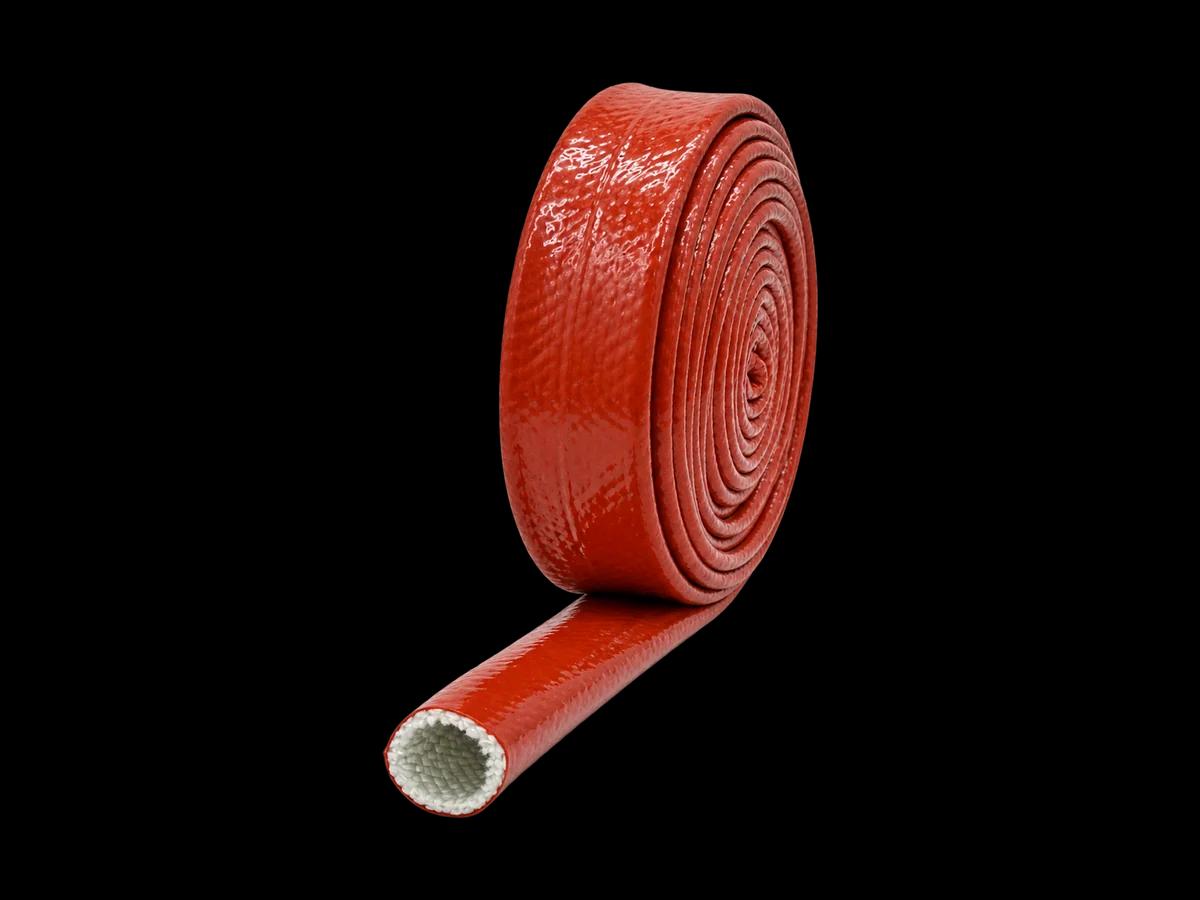
A closed sleeve, from roll to cut end
When a hose end is accessible, a continuous tube can cover the run. Compare the fitting diameter with the available sleeve opening before choosing a size.
Product test reports
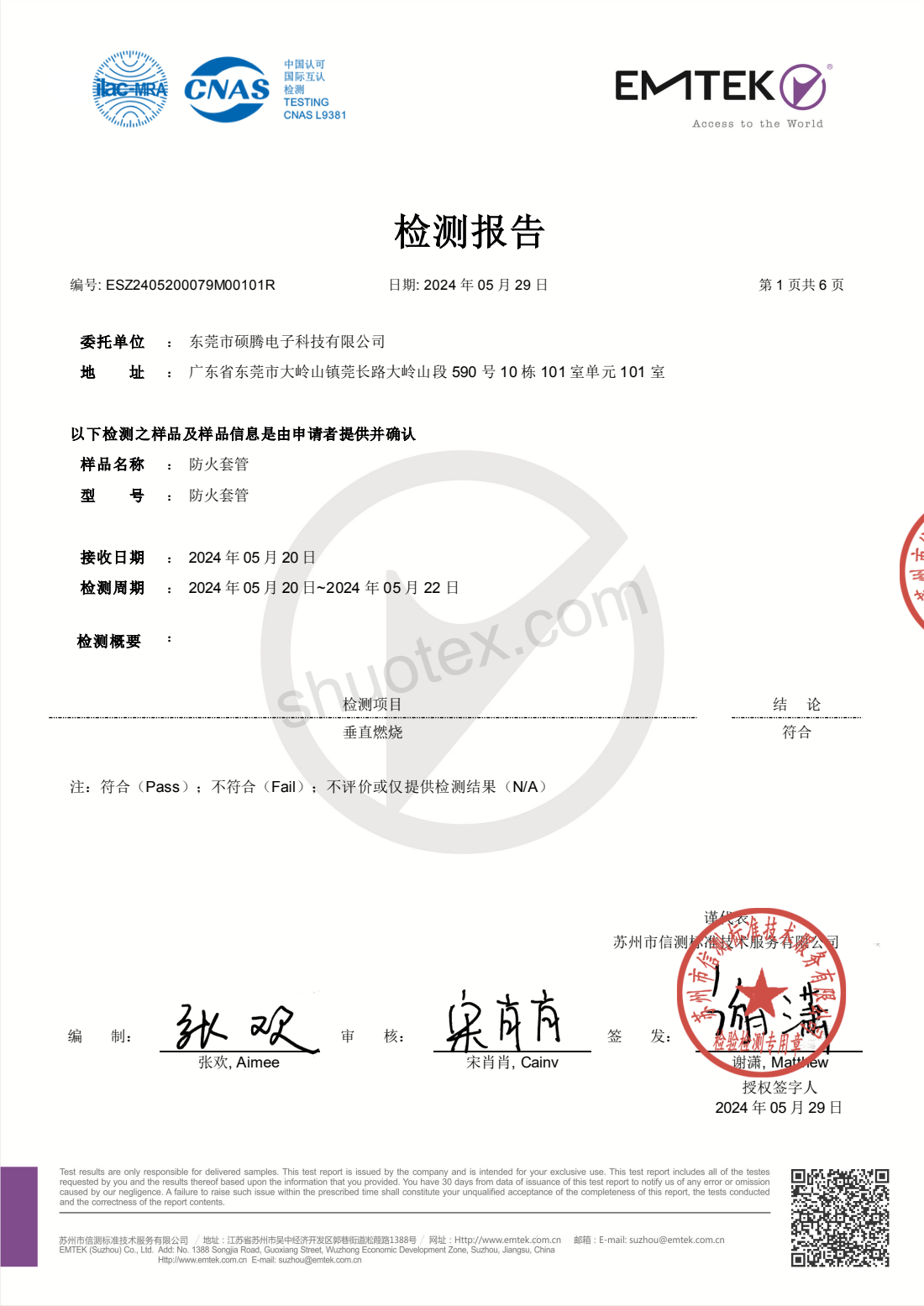
- Tested sample
- Five specimens measuring 125 × 13 × 3 mm came from fire sleeve sample E2405200079-01. The laboratory conditioned them for 48 hours at 23 ± 2 °C and 50 ± 10% relative humidity.
- Result
- The 3 mm specimens met the V-0 criteria in the UL 94-2023 vertical burning test.
- Scope of result
- V-0 applies to the submitted specimens at the tested thickness and conditioning. Confirm the match for your colour, wall thickness and construction. Continuous and peak service temperatures require separate test data.
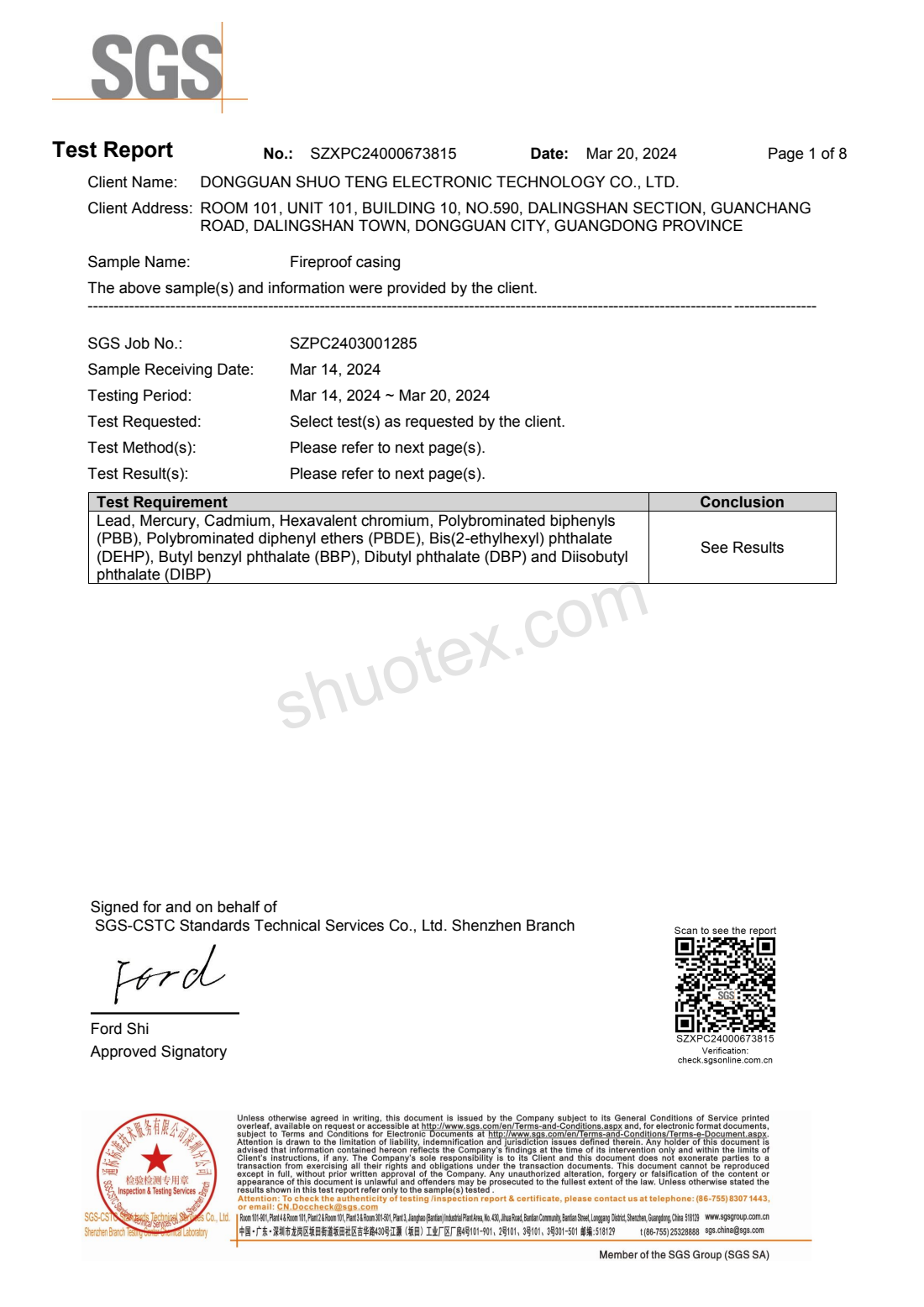 View cover
Restricted substances
SGS Shenzhen · 20 March 2024 · English
Report SZXPC24000673815
Request this report- Tested sample
- SGS combined white fabric (8A) and red material (8B) from the submitted fire sleeve into a single test portion (008).
- Result
- The mixed portion contained 7 mg/kg of lead and 245 mg/kg of dibutyl phthalate (DBP). SGS reports the measurements as reference values for the mixture.
- Scope of result
- The values apply to the combined red and white sample. The individual materials, blue and black sleeves, and other constructions require their own supporting data.