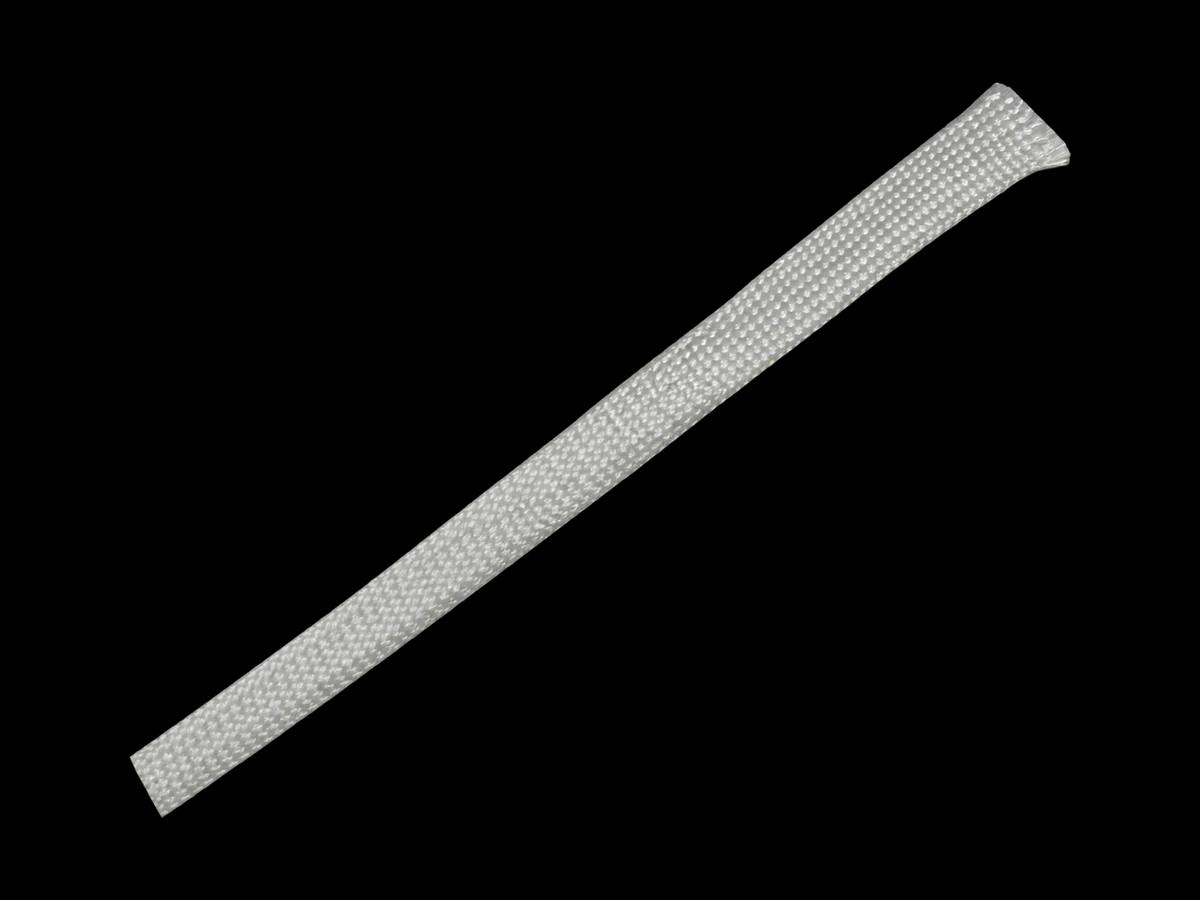
Fiberglass Sleeving
Slide this flexible fiberglass tube over heater leads and wire bundles routed near hot components.
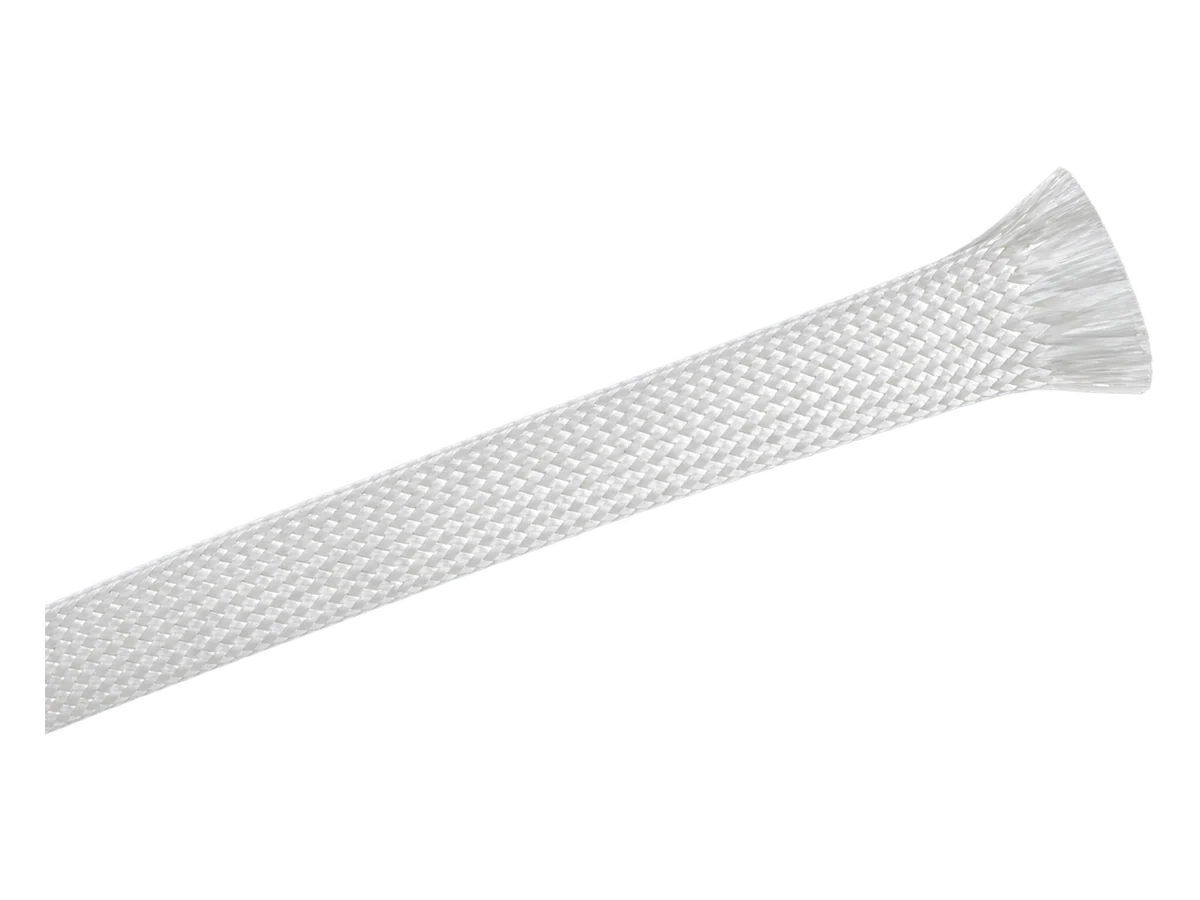
Technical specifications
| Material | Alkali-free fiberglass yarn |
|---|---|
| Construction | Braided tube |
| Reference inside diameter | 4–80 mm |
| Colour shown | White |
| Installation | Slide over the cable or lead |
| Cut length | Specify the length per piece |
Finish and insulation data. Specify the required finish, temperature and exposure time. For electrical insulation, request dielectric data for the chosen finish and wall thickness. For silicone-sensitive assemblies, request a material declaration for the ordered model.
Construction
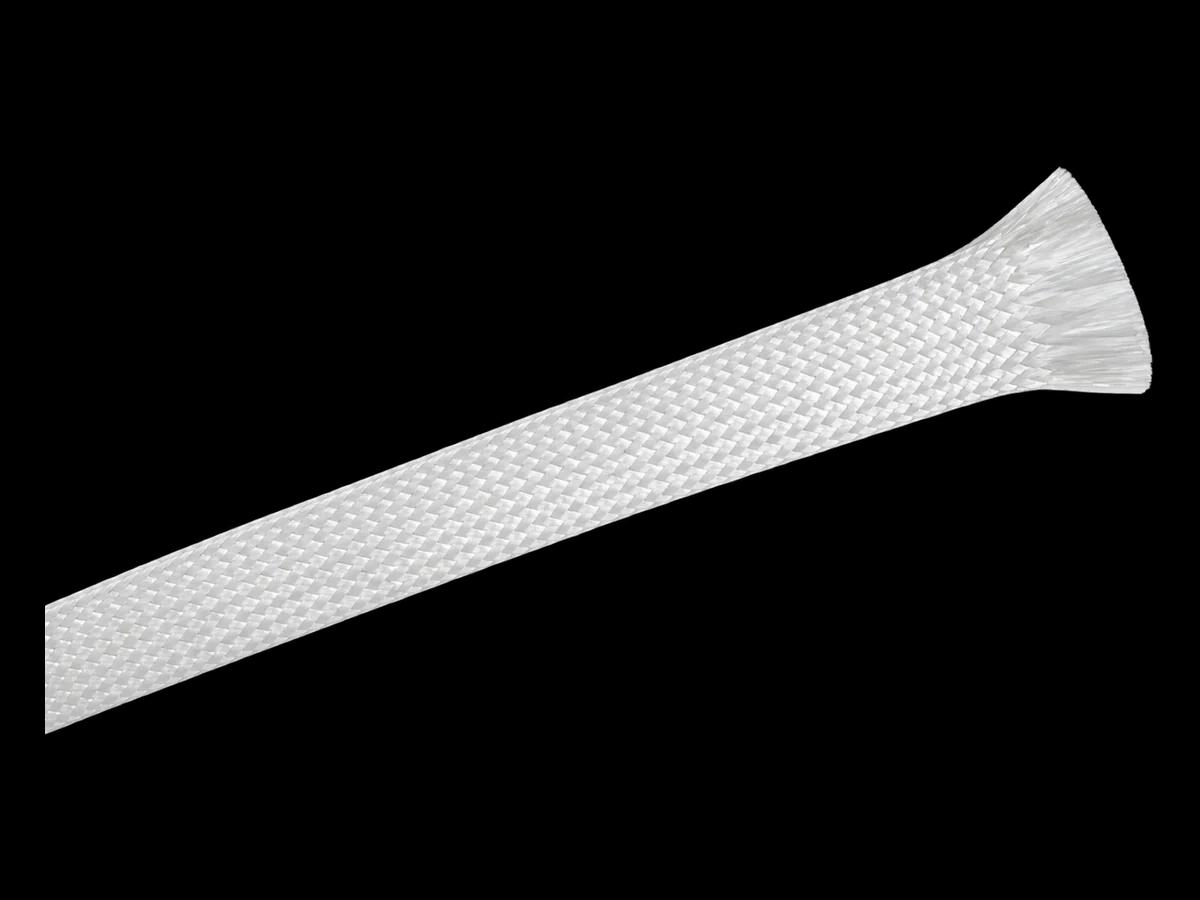
Heat-set tubular braid
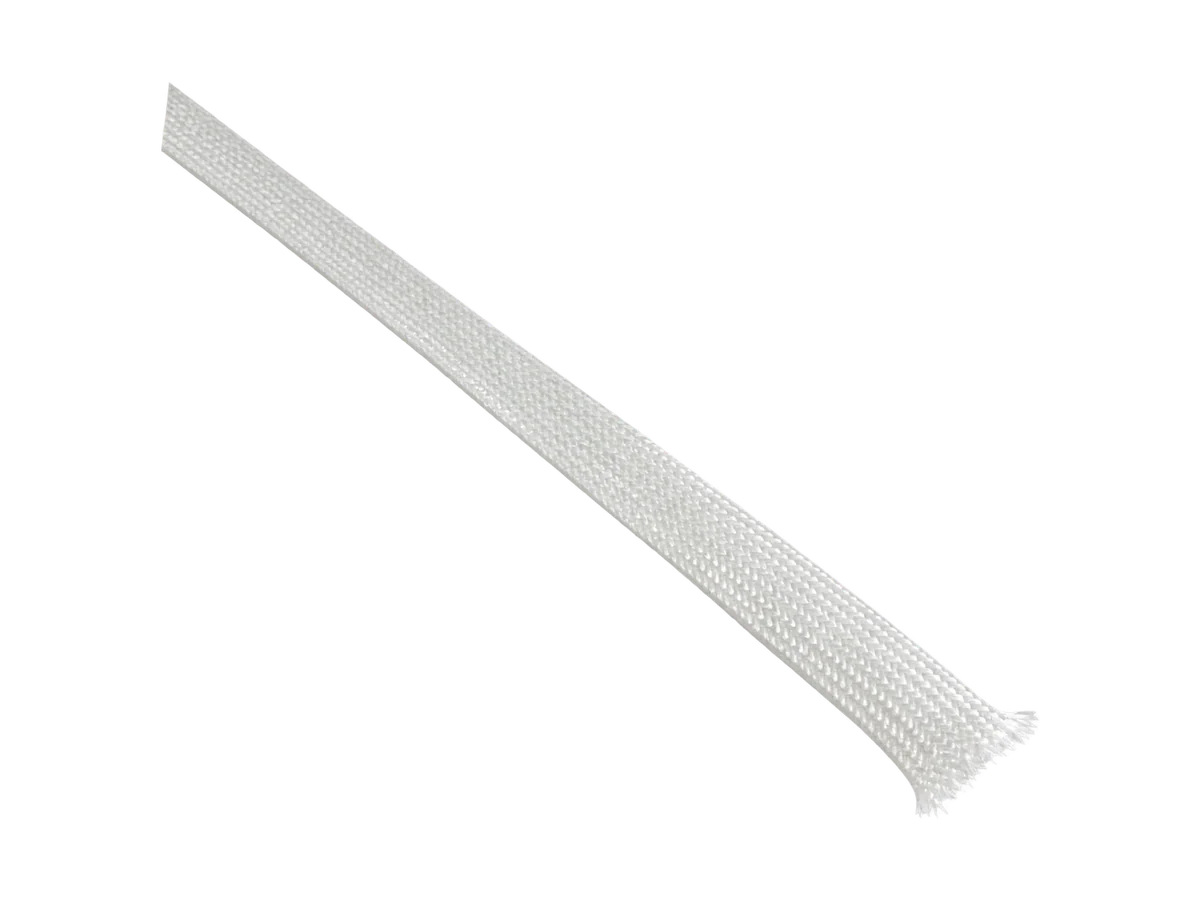
The crossing yarns are visible on the sleeve wall and separate at the cut end.
Alkali-free glass yarn is braided into a dense tube and heat-set for an even wall. The braid expands over irregular pipe shapes, bends with a harness and is easy to thread over wiring in batches.
- Heat transfer and airflow
- Air spaces in the braid slow heat transfer while allowing air to circulate and heat to dissipate. The lightweight wall insulates hot lines, helps reduce contact with hot surfaces and shields wiring from debris and oil splashes.
- Wear and ageing
- The brief describes a thick, strong braid that resists abrasion and pulling for longer service life. It also cites stiffness, resistance to oxidation and ageing, and retention of strength and stability with little powdering at high temperature.
- Chemical exposure
- The glass yarn is described as resistant to many acids, alkalis, solvents and corrosive gases. Specify the substance, concentration and temperature when checking suitability.
- Flame behaviour
- The brief describes the glass braid as non-combustible and self-extinguishing after flame exposure. Request the test classification for the supplied finish if flame performance is a selection requirement.
- Odour and handling
- The brief describes the braid as odourless and flexible enough to route around bends or thread over a wire bundle.
Applications
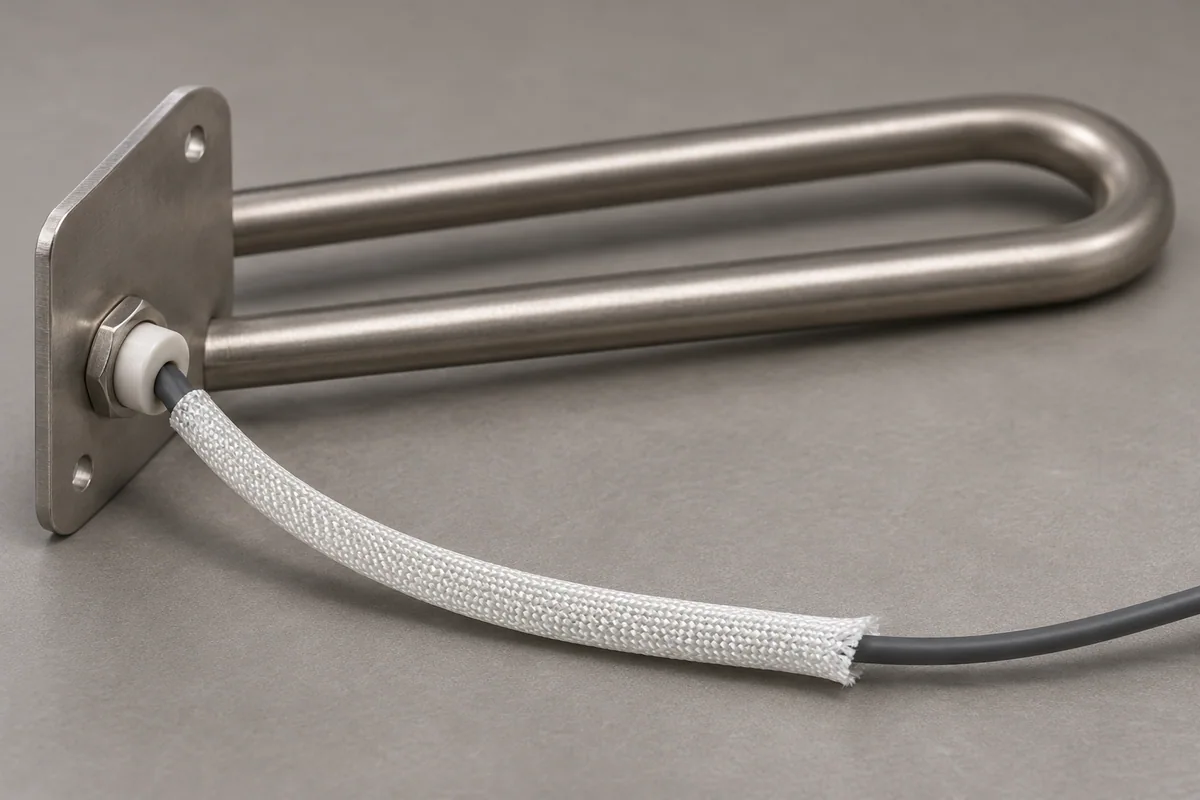
Electric heating equipment
The white braid covers the lead where it exits the metal heating element.
Lead wires on heating tubes, band heaters and heating elements in ovens or drying equipment.
- Industrial high-temperature wiring
- Wire and cable runs in metallurgy, heat treatment and kiln equipment.
- Appliance heating assemblies
- Internal wiring in ovens, heat guns and industrial heaters.
- Boilers and HVAC
- Pipe coverings where thermal insulation and reduced contact with hot surfaces are required.
- Automotive and new-energy equipment
- Welding-fixture harnesses, engine-bay piping, wiring in vehicle hot zones and turbocharger piping.
Selection & handling
- Specifying the braid
- Give the bundle diameter, cut length, required finish and operating conditions. For electrical insulation, request dielectric data for the selected construction; do not select on temperature alone.
- Handling fiberglass
- The product brief advises wearing gloves and a mask. Exposed glass fibres can cause skin irritation, particularly when handling cut ends.
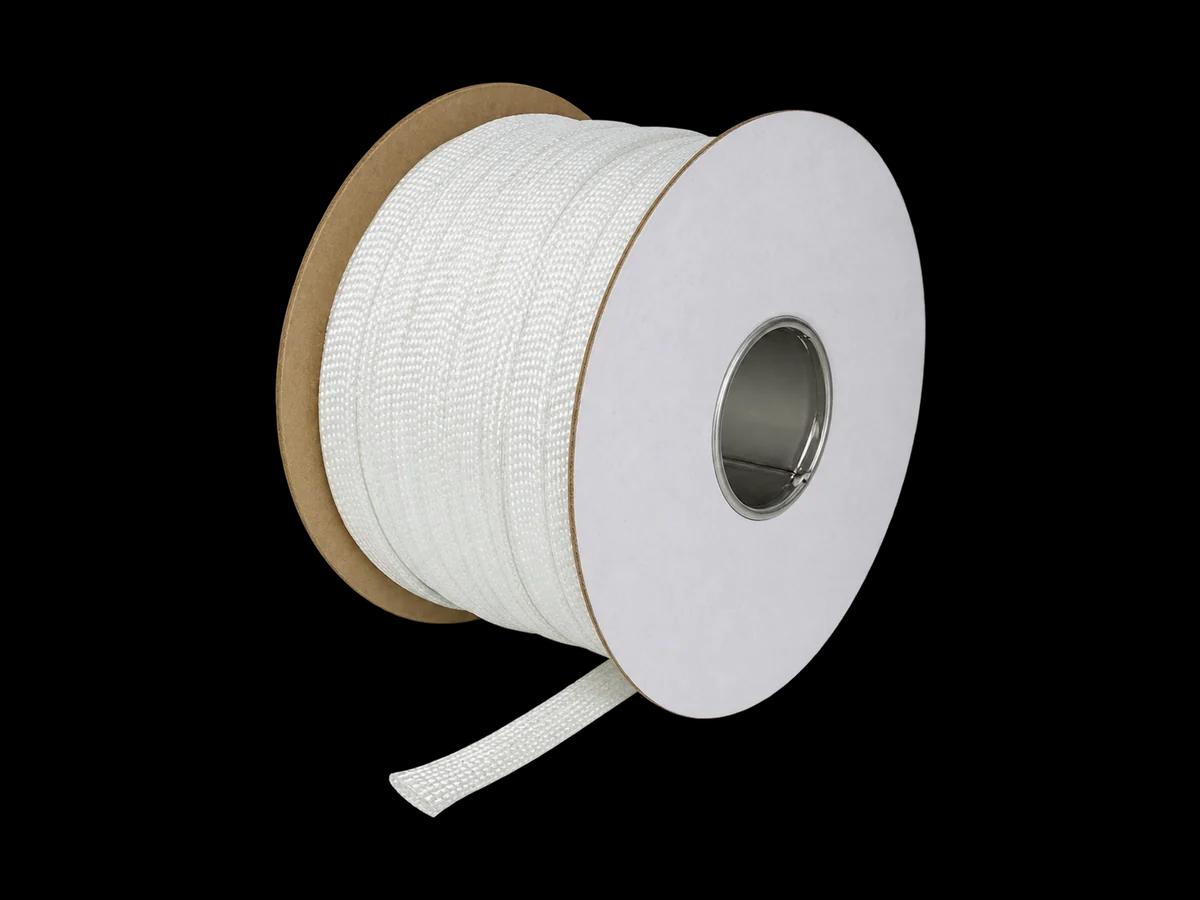
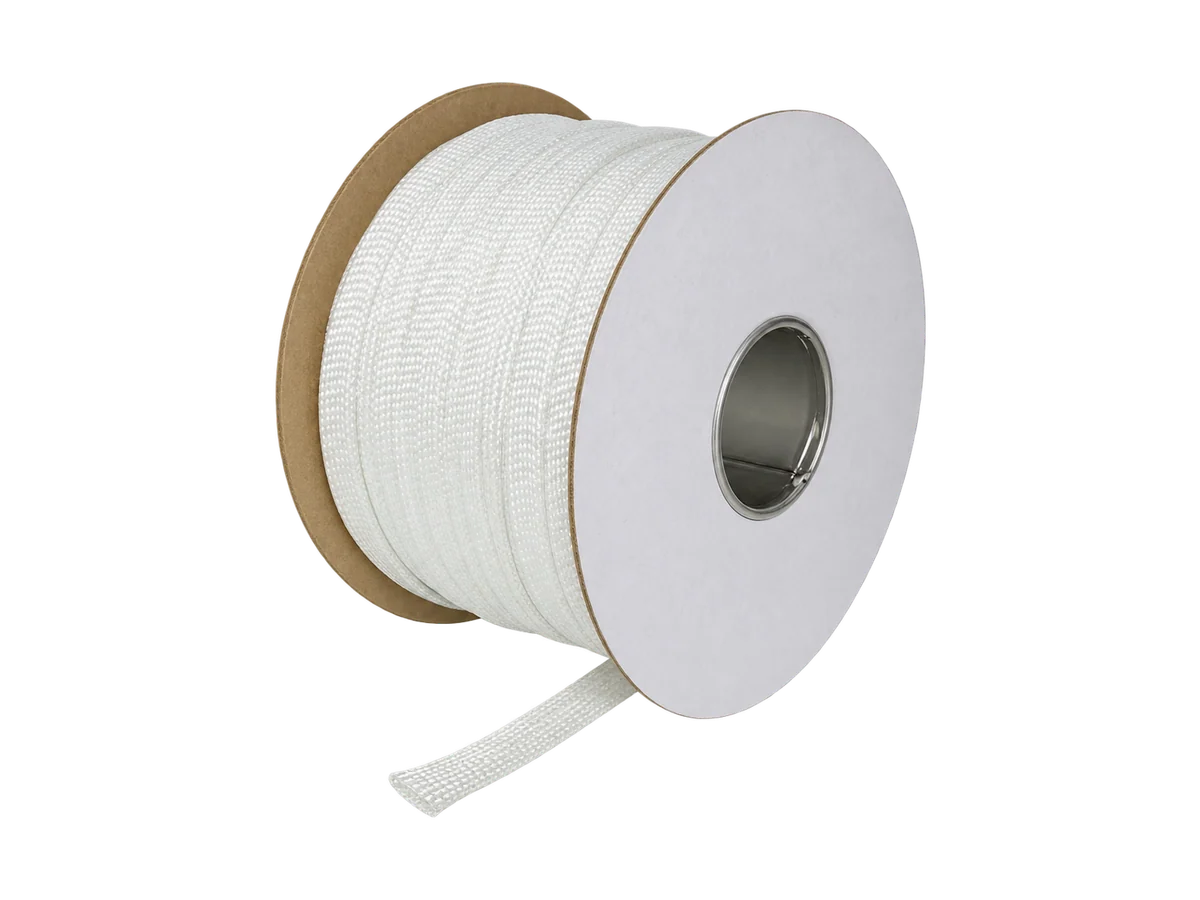
From a fiberglass reel to a wiring sample
Use the sample to check the opening, flexibility and finish against the wiring assembly. The required finish and operating temperature belong on the specification as well as the inside diameter.